
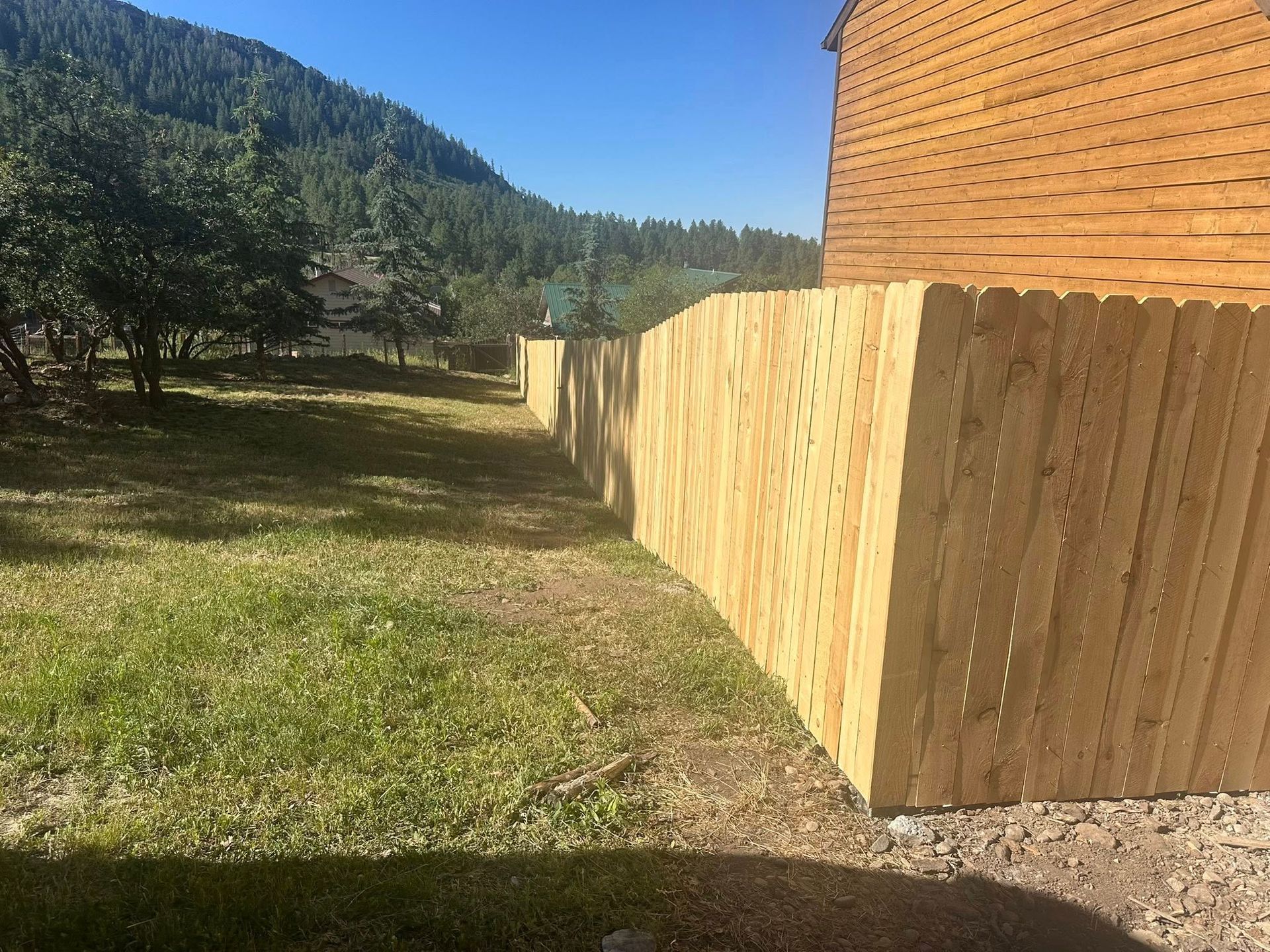
Backyard Enclosures That Stop Neighbor Visibility
Wood Privacy Fencing in Colorado Springs for properties requiring visual screening, pet containment, or defined yard boundaries
Outdoor spaces without visual barriers expose backyards to neighbor sightlines, street traffic, and adjoining properties, limiting how comfortably you use patios, pools, or play areas. Wood privacy fencing creates solid enclosures that block views, reduce noise transmission, and establish clear property lines. Diamondback Fence Company installs wood privacy fences for residential properties throughout Colorado Springs, building enclosures for side yards, full perimeter boundaries, and sectioned areas where dogs need containment or outdoor living spaces require separation. The installation process accounts for Colorado's wind exposure, freeze-thaw cycles, and UV intensity that affect wood longevity and structural stability.
Installation begins with selecting fence height, board style, and post spacing based on privacy goals, wind load, and soil conditions. Posts set in concrete footings anchor the fence structure, while horizontal rails connect posts and support vertical boards. Board spacing determines privacy level—tight spacing eliminates sightlines completely, while slight gaps allow airflow that reduces wind pressure on the fence face.
Request a custom wood privacy fence estimate to review layout options, material choices, and installation timelines for your property.
What Changes Once Fencing Completes
Proper wood fence construction requires posts embedded deep enough to resist frost heave and wind force common in Southern Colorado. Post depth typically reaches 30 inches or deeper in clay soils prone to expansion, and concrete footings extend below the frost line to prevent seasonal movement. Rail attachment uses galvanized hardware that resists corrosion from moisture contact, and board selection focuses on lumber with minimal warping tendency and appropriate thickness for span distances between posts.
Once installation finishes, neighbors and passersby no longer see into your yard. Dogs remain contained without chain tethering, and children play without direct street exposure. Wind noise decreases noticeably when solid fencing blocks airflow from prevailing directions, and outdoor furniture arrangements no longer require positioning to avoid sightlines. The fence defines property edges clearly, preventing encroachment issues and creating visual separation from adjacent land uses.
Wood fencing requires periodic staining or sealing to slow moisture absorption and UV degradation, particularly in Colorado's high-altitude sun exposure. Some installations include lattice top sections that add height without creating solid wind walls, and gate placements provide access points for equipment or side yard entry without compromising perimeter enclosure.
Answers to Frequent Service Questions
Wood privacy fencing involves decisions about materials, construction methods, and maintenance requirements that affect both appearance and long-term durability.
What wood types work best for Colorado Springs climate conditions?
Cedar and pressure-treated pine both handle moisture and insect exposure well, though cedar naturally resists rot without chemical treatment. Pressure-treated lumber costs less and accepts stain finishes readily, while cedar weathers to a gray patina unless sealed regularly. Both materials withstand freeze-thaw cycles when properly installed with adequate drainage at ground level.
How tall can privacy fences be built legally?
Height limits vary by zoning district and property location, with most residential areas allowing six-foot fences in backyards and four-foot fences in front yards. Corner lots face additional restrictions to maintain traffic visibility, and homeowner association rules sometimes impose stricter limits than municipal codes. Checking local regulations before design finalization prevents compliance issues.
Why do some fence boards warp or twist after installation?
Warping occurs when lumber moisture content changes unevenly after installation, causing one side to expand or contract more than the other. Kiln-dried lumber warps less than green wood, and applying finish to all board surfaces including ends slows moisture movement. Post spacing also affects warping—wider spans allow more board flex, increasing twist likelihood.
How long does wood privacy fencing last before requiring replacement?
Lifespan depends on wood type, maintenance consistency, and exposure conditions, typically ranging from 15 to 25 years. Posts fail before boards in most cases, particularly when concrete footings allow water pooling at ground contact points. Regular sealing extends board life significantly by preventing moisture penetration that leads to rot and splitting.
What maintenance keeps wood fencing looking good over time?
Annual inspection identifies boards that need reattachment or replacement before failure spreads. Cleaning removes dirt and mildew buildup that holds moisture against wood surfaces, and reapplying stain or sealant every two to three years prevents UV damage and water absorption. Trimming vegetation away from fence lines improves airflow and reduces moisture retention.
Diamondback Fence Company builds wood privacy fencing with attention to post stability, quality lumber selection, and construction practices that account for seasonal weather shifts. Contact the company to discuss fence height, style, and layout options designed for long-term backyard privacy and property definition.