
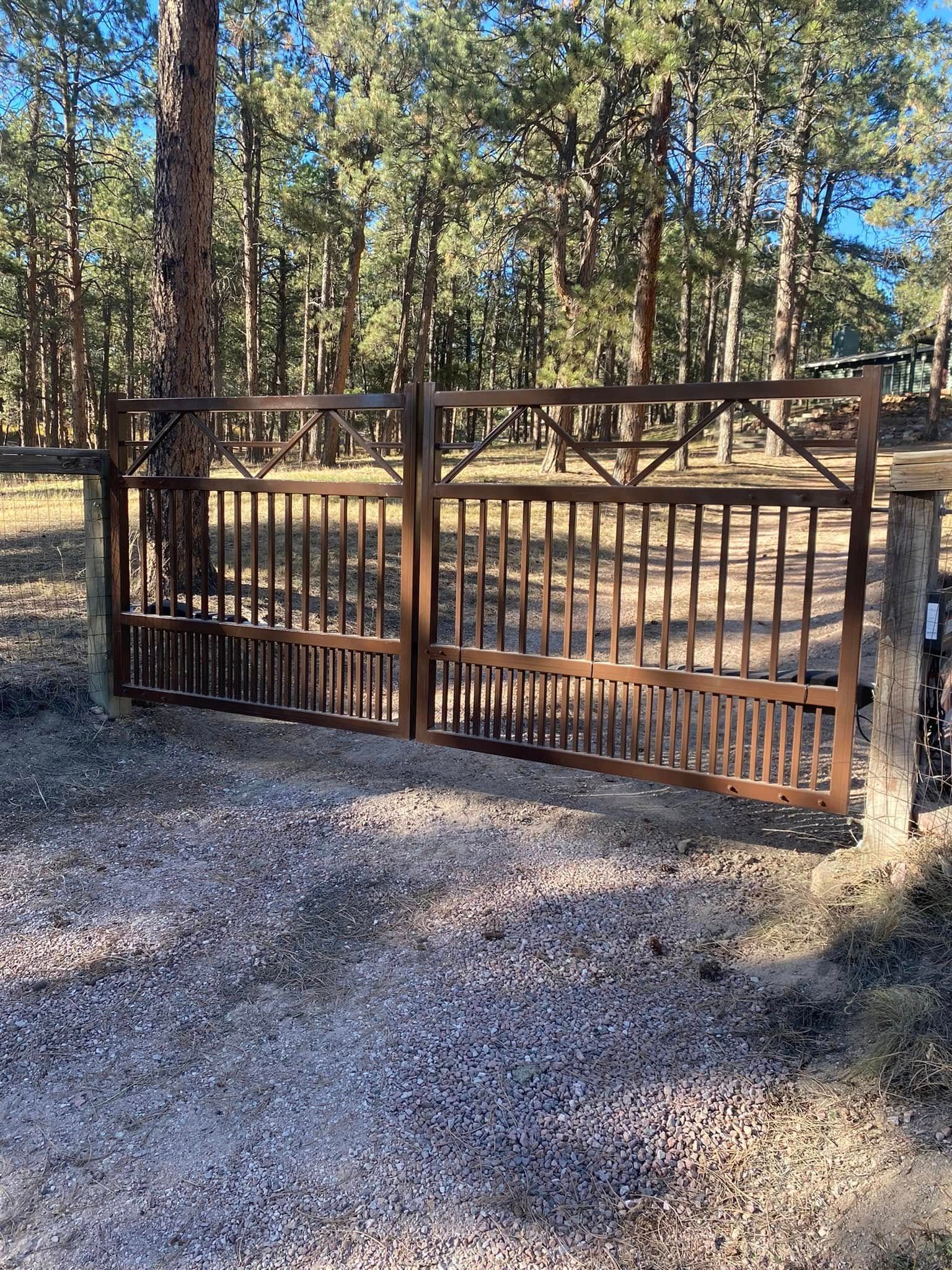
Gates Designed for Decades of Use
Gate Installation in Colorado Springs for driveways, perimeter systems, and commercial lots requiring secure access points
A properly installed gate operates smoothly every day without sagging, binding, or requiring constant hardware adjustments to maintain alignment. Diamondback Fence Company installs custom gate systems for residential driveways, privacy fencing, commercial properties, and ranch perimeter systems throughout Colorado Springs, building gates that match existing wood, chain link, ornamental metal, and vinyl fencing. Gates are designed with attention to hinge load capacity, frame reinforcement that prevents racking under repeated use, and latch mechanisms that remain secure without failing during wind events common to Southern Colorado.
Installation begins with measuring the opening to ensure clearance for gate swing or slide operation, selecting hinge or roller hardware rated for the gate's weight and daily usage frequency, and determining whether automatic operation fits your access control needs. Posts are set deeper and reinforced more heavily than standard fence posts since gates concentrate load at specific stress points rather than distributing it across a fence line. You receive material recommendations based on whether the gate will be used multiple times daily or only occasionally, and whether it needs to provide security, convenience, or both.
Request a custom gate estimate to review design options that support your property's traffic patterns and security requirements.
Why Gate Hardware Determines Long-Term Performance
Gate hinges must handle both the gate's static weight and the dynamic forces created each time it opens and closes, which is why residential-grade hardware fails quickly on gates used multiple times daily. Latches need enough throw to engage securely even when posts shift slightly with seasonal soil movement, and automatic gate systems require alignment precision that manual gates can tolerate without functional problems. Roller track systems for sliding gates perform better than cantilever designs in environments with gravel driveways or unpaved surfaces where debris can obstruct ground-level wheels.
Once your gate is installed, it opens and closes without excessive effort or resistance, latches engage positively without needing adjustment after the first few uses, and the gate remains level rather than sagging at the latch end over time. Automatic systems respond consistently to remote or keypad inputs, and manual gates swing freely without dragging along the ground or requiring you to lift the latch end to relieve hinge stress.
Gate frames are often reinforced with diagonal bracing that prevents the rectangular frame from distorting into a parallelogram under its own weight, and posts receive concrete footings sized to resist the lateral forces applied during operation. The installation accounts for ground slope so the gate clears properly throughout its swing arc, and automatic systems include safety sensors that prevent the gate from closing on vehicles or pedestrians in the opening.
What Property Owners Usually Ask
Gate installation decisions often involve questions about automation, material durability, and how to prevent common operational problems that develop with poorly installed systems.
What determines whether a gate should swing or slide for a specific opening?
Swing gates require clearance space equal to the gate width, while sliding gates need lateral room alongside the opening and perform better when the driveway is paved or graded flat.
How are automatic gate systems powered in locations without nearby electrical outlets?
Solar panel kits with battery backup provide reliable power for automatic gate operators in rural or remote areas where running electrical service is impractical or costly.
What hinge hardware prevents gates from sagging after years of use in Colorado Springs?
Heavy-duty strap hinges with sealed bearings distribute weight more effectively than standard butt hinges, and adjustable hinges allow you to re-level the gate as posts settle over time.
When should property owners choose manual gates instead of automatic systems?
Manual gates work well for low-traffic residential applications where convenience doesn't justify the cost of automation, and they eliminate maintenance requirements for motors, sensors, and control systems.
How wide can a single gate be before it requires a double-gate configuration?
Single gates wider than 12 feet become difficult to support without excessive hinge stress, and double-gate designs distribute weight more evenly while reducing sag over the gate's lifespan.
Diamondback Fence Company builds gate systems with hardware and reinforcement designed for long-term reliability in Southern Colorado's weather conditions. Call (719) 238-2938 to schedule a consultation and review gate options suited to your property's access needs.