
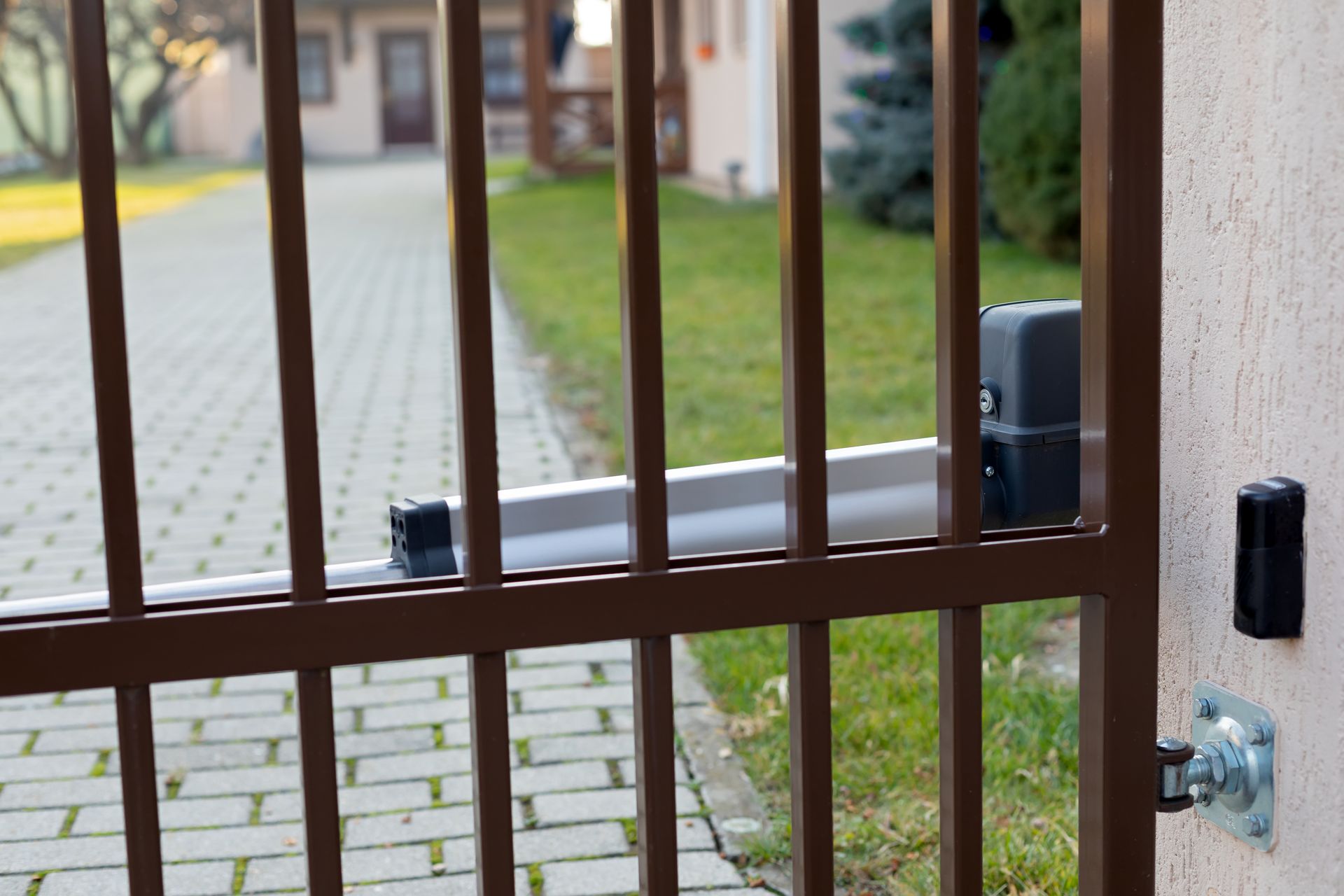
Restore Function to Gates That Stopped Working
Automatic Gate Repair in Colorado Springs for systems experiencing motor failure, alignment issues, or sensor malfunctions
A gate that stops mid-cycle, reverses unexpectedly, or refuses to respond to remote signals creates access problems that disrupt daily routines and compromise property security. These failures often stem from worn components, electrical connection degradation, or misalignment caused by ground settling or impact damage. Diamondback Fence Company repairs automatic gate systems serving residential and commercial properties throughout Colorado Springs, addressing motor performance issues, damaged hardware, and control system malfunctions. The repair process focuses on diagnosing the root cause rather than temporarily bypassing symptoms, ensuring long-term reliability after service completes.
Gate repair begins with evaluating motor function, testing limit switches that control travel distance, inspecting track or hinge alignment, and checking electrical connections for corrosion or loose terminals. Common failures include motor gear wear from insufficient lubrication, photocell sensor obstruction from dirt accumulation, and chain or belt tension loss that prevents smooth movement. Each issue requires specific corrective action—motor replacement differs significantly from realigning a binding track.
Arrange a system evaluation to identify the specific failure cause and receive a practical repair recommendation based on component condition.
How Repair Work Addresses Functional Problems
Repair work targets the failure point directly rather than replacing entire systems unnecessarily. When motors fail, the issue often involves internal gears worn from years of operation or capacitors that no longer hold electrical charge. Track misalignment usually results from post movement caused by soil settling common in Colorado Springs' clay-heavy ground conditions. Safety sensors stop functioning when wiring insulation cracks from UV exposure or when mounting brackets shift out of alignment.
After repair completes, gate operation returns to predictable patterns. The system responds immediately to remote commands without hesitation or partial movement. Gates travel the full distance without stopping prematurely, and closing cycles complete without reversing unexpectedly. Noise levels decrease when worn rollers or hinges receive replacement, and electrical connections stabilized through repair prevent intermittent operation caused by loose wiring.
Repair services also address gate structural issues that affect motor performance, such as sagging frames that create binding or wheels that no longer roll smoothly along tracks. Some repairs involve programming adjustments to limit switches or force settings rather than physical component replacement, particularly when systems were improperly configured during initial installation.
Common Concerns Before Scheduling Repairs
Understanding what causes gate failures and how repairs restore function helps property owners make informed decisions about system maintenance and component replacement timing.
What causes automatic gates to stop working suddenly?
Motor failures often result from capacitor deterioration or gear wear, while sudden operational loss can indicate tripped circuit breakers, disconnected power supplies, or remote transmitter battery depletion. Gates that worked intermittently before complete failure typically have loose electrical connections or corroded terminals that eventually lose conductivity.
How do you determine whether repair or replacement makes more sense?
Evaluation considers motor age, availability of replacement parts, and whether structural damage affects the gate frame itself. Motors older than ten years with significant internal wear may cost nearly as much to repair as replace, while newer systems with isolated component failures benefit from targeted repair. Diamondback Fence Company provides honest assessments based on actual system condition rather than pushing unnecessary replacements.
Why do gates reverse direction before fully closing?
Reversing behavior usually indicates obstruction detection sensors triggering incorrectly, either from misalignment, dirt accumulation on photocell lenses, or sensitivity settings calibrated too high. Force limit settings programmed into the motor control board can also cause reversal if the gate encounters resistance from binding tracks or dragging components.
How long do repaired gate systems typically last after service?
Lifespan after repair depends on the components replaced and overall system age. Motors rebuilt with new gears and capacitors often function reliably for another five to seven years, while structural repairs addressing alignment or hardware issues prevent recurring failures. Regular maintenance following repair extends operational life significantly.
What happens if repair work reveals additional problems during inspection?
Service visits sometimes uncover secondary issues not immediately apparent during initial failure, such as wiring damaged by rodents or corrosion spreading through control boards. You receive clear explanation of findings and cost estimates for additional work before any expanded repair begins, allowing informed decisions about scope.
Small issues like sluggish gate movement or occasional non-response escalate into complete system failure when left unaddressed. Diamondback Fence Company encourages scheduling repair service at the first sign of irregular operation to prevent access disruptions and avoid more extensive corrective work later.