Repairs That Stop Damage From Spreading
Fence Repair in Colorado Springs for leaning sections, broken posts, and structural failures before replacement becomes necessary
Wind events in Southern Colorado regularly exceed 40 mph, and a single compromised post can transfer stress to adjacent sections until an entire fence line requires replacement instead of isolated repairs. Broken panels, loose gates, and posts that lean after soil erosion create security gaps and accelerate wear on surrounding sections. Diamondback Fence Company repairs wood fencing, vinyl fencing, chain link fencing, ornamental fencing, ranch fencing, and gate systems throughout Colorado Springs, addressing structural issues before minor damage spreads to sections that are still sound.
Repair work begins with assessing whether posts have rotted below ground level, if panels can be stabilized without full replacement, and whether gate hardware needs adjustment or complete replacement based on wear patterns. Posts are re-set to proper depth when soil erosion or frost heave has compromised stability, and panels are matched to existing fence styles whenever possible to maintain a consistent appearance across your property. You receive honest assessments about whether repairs extend the fence's useful life or if replacement makes more sense based on the extent of damage.
Schedule a fence inspection to identify structural issues and receive repair recommendations before minor problems expand into larger projects.
What Causes Fence Failures in This Region
Fence posts fail most often where water collects at the base and freezes, expanding until wood splits or concrete footings crack. Chain link fencing develops slack when tension wire corrodes or when corner posts shift under repeated wind load. Vinyl fencing cracks at joints when temperature swings cause contraction and expansion that exceeds the material's flex capacity, and ornamental fencing loses structural integrity when rust penetrates welds or mounting brackets.
After repairs are completed, fence sections stand plumb without leaning, gates close without binding or dragging along the ground, and panels no longer rattle or flex excessively during wind. The fence maintains its intended function—whether that's privacy, security, or containment—without gaps that compromise its purpose. Repaired sections blend with the existing fence line, and hardware functions smoothly without requiring force to operate latches or hinges.
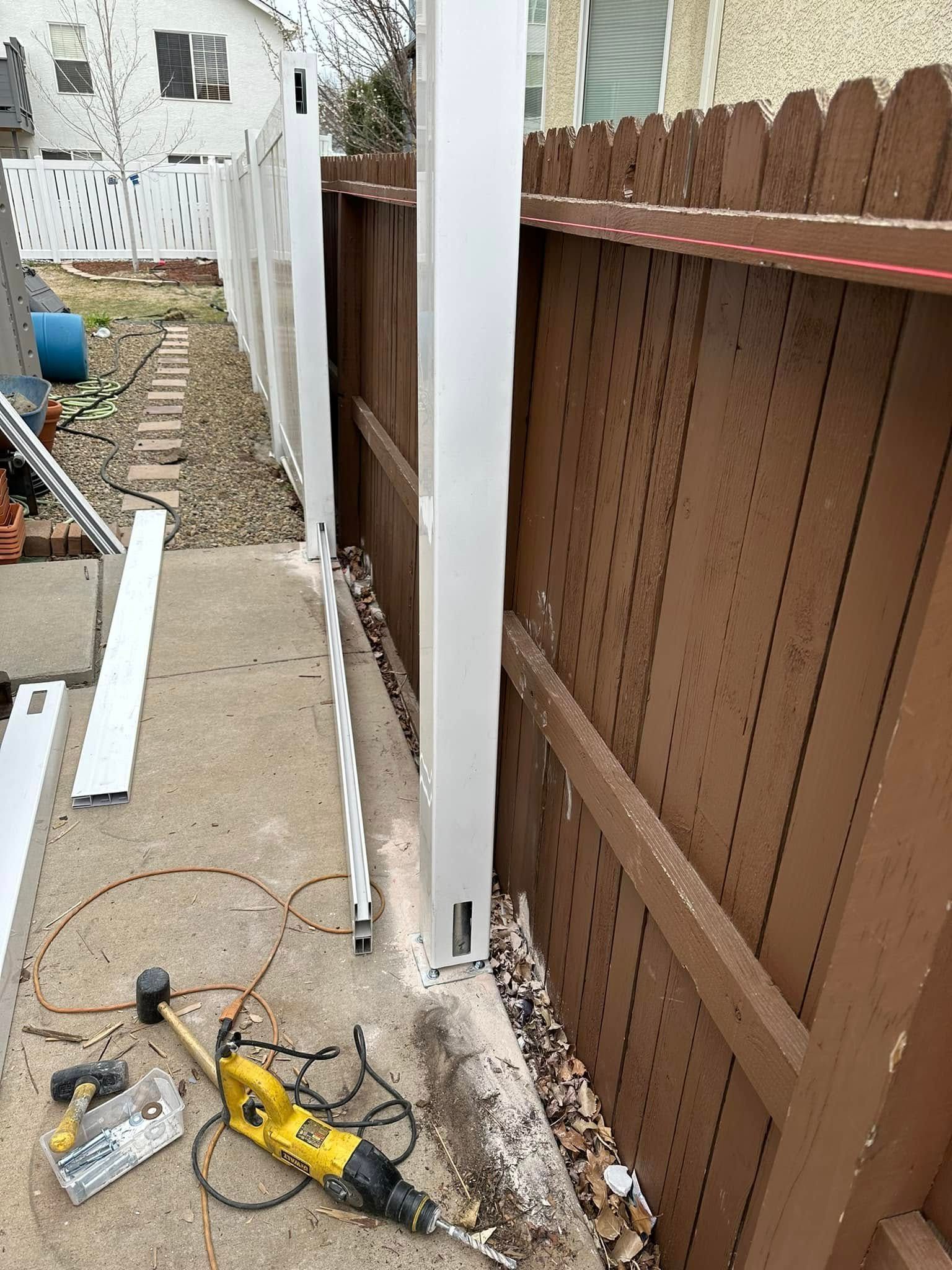
The repair process includes replacing rotted posts with pressure-treated or composite materials that resist moisture better than the original installation, reinforcing corner assemblies that show signs of stress, and adjusting gate alignment so weight distributes evenly across hinges. Damaged panels are replaced with materials that match the existing fence in style and finish, and loose sections are tightened to restore the fence line's original tension and appearance.
Answers to Frequent Fence Repair Questions
Property owners usually want to know whether repairs are cost-effective compared to replacement, how long repairs will last, and what causes the damage in the first place.
What signs indicate a fence needs professional repair rather than full replacement?
Isolated damage like one or two broken posts, a single damaged panel, or a gate that no longer closes properly can usually be repaired effectively if the rest of the fence remains structurally sound.
How do repair costs compare to installing a new fence section?
Repairs typically cost 30 to 50 percent less than replacing an entire section, assuming the damage is localized and the surrounding structure is stable enough to support the repaired area.
Why do fence posts lean after heavy rain or snowmelt in Colorado Springs?
Posts lean when water saturates soil and reduces its load-bearing capacity, or when freeze-thaw cycles heave posts upward and break their anchoring connection to the surrounding ground.
How quickly should property owners address fence damage once it's noticed?
Prompt repairs prevent stress transfer to adjacent sections, reduce the risk of injury from unstable fencing, and stop minor damage from escalating into structural failures that require more extensive work.
What materials are used to match existing fence styles during repairs?
Wood species, vinyl profiles, chain link gauge, and ornamental metal finishes are matched as closely as possible to the original installation so repaired sections blend visually with the rest of the fence line.
Diamondback Fence Company prioritizes repairs that extend fence life without unnecessary replacement costs. Request a service appointment to address damaged fencing before the issue affects additional sections of your property's perimeter.