
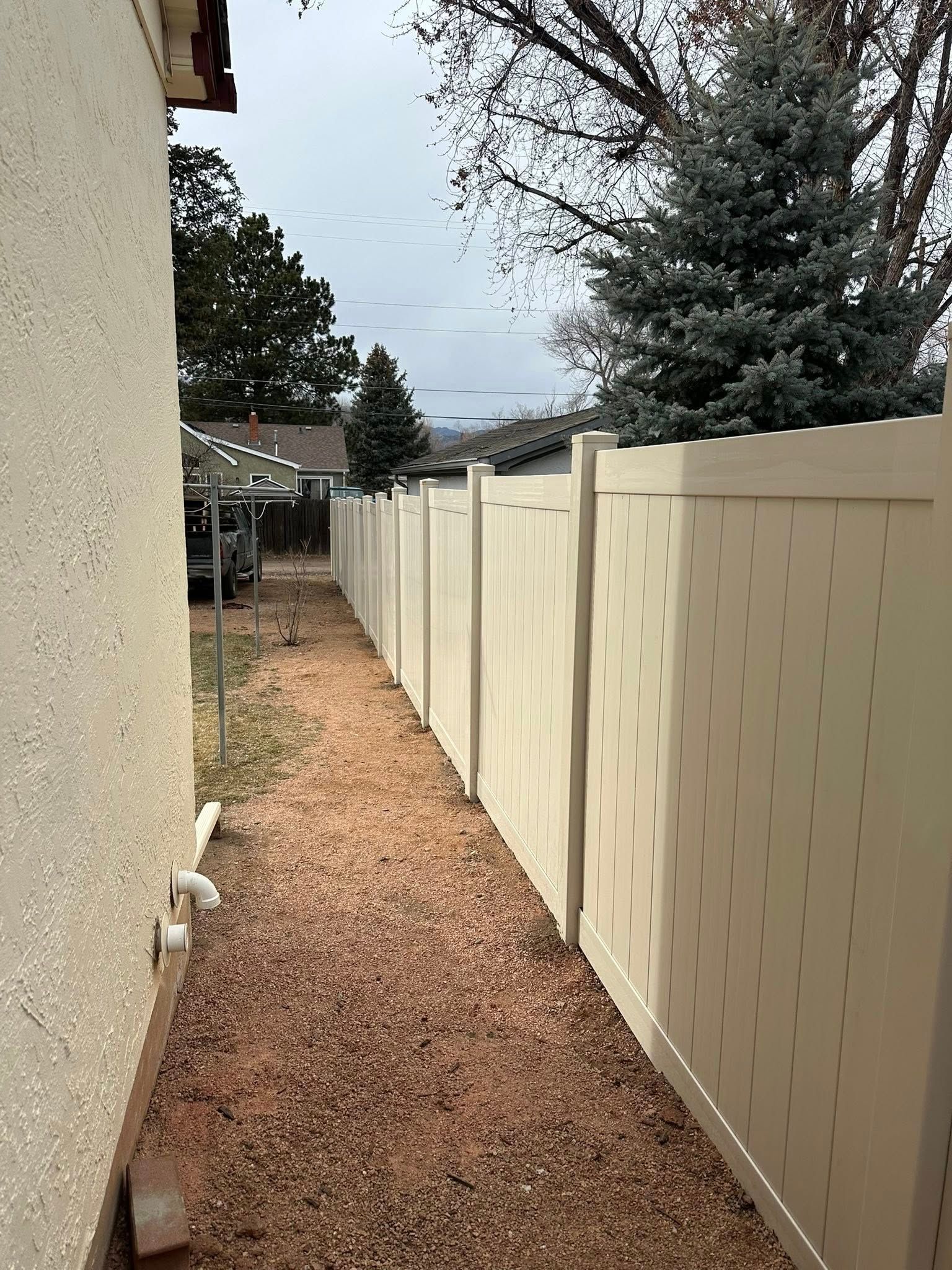
Fencing That Requires No Staining or Sealing
Vinyl Fencing in Colorado Springs for properties where maintenance avoidance and long-term appearance matter
Vinyl fencing resists warping, rotting, and finish degradation without requiring the staining, sealing, or painting that wood fencing demands every few years. The material composition remains stable through Colorado's temperature swings and UV exposure, maintaining color and structural integrity decades after installation. Diamondback Fence Company installs vinyl fencing for residential property lines, pool enclosures, decorative boundaries, and privacy applications where homeowners prioritize durability over the natural wood aesthetic. Each installation includes a lifetime workmanship warranty, reflecting confidence in both material performance and construction quality. Vinyl fencing costs more initially than wood but eliminates ongoing maintenance expenses that accumulate over the fence's lifespan.
Installation process mirrors wood fence construction in layout and post setting but differs in component assembly. Vinyl posts contain aluminum reinforcement inserts that prevent flexing under wind load, and rails slide into routed post channels rather than attaching with external hardware. Pickets or panels lock into rail systems using tongue-and-groove designs that allow thermal expansion without creating gaps or buckling.
Request a vinyl fence estimate to compare style options, color selections, and layout configurations that complement your property appearance.
What Proper Installation Requires
Vinyl fence durability depends on post reinforcement and proper spacing to prevent mid-span sagging. Posts set without aluminum inserts flex excessively in wind, causing rails to disengage from channels and panels to shift out of alignment. Concrete footings must extend below frost depth to prevent heaving that misaligns panel connections, and post plumbness requires verification during setting since vinyl offers no adjustment tolerance after concrete cures. Panel installation follows specific temperature guidelines—material expands in heat and contracts in cold, requiring gap allowances that vary by ambient temperature during installation.
Once installation completes, the fence maintains consistent appearance without finish application or wood grain weathering. You never sand, stain, or repaint surfaces, and pressure washing removes accumulated dirt without damaging material. The fence color remains stable rather than fading to gray or developing surface checking common in untreated wood. Gates operate smoothly on stainless steel hinges that resist corrosion, and panel connections remain tight without the nail-popping or board shrinkage that occurs as wood dries.
Vinyl fencing comes in multiple styles including privacy panels, picket designs, and decorative options with lattice accents. Color choices extend beyond white to include tan, gray, and earth tones that coordinate with home exteriors. The material does not attract insects, supports mold growth, or splinter, making it suitable for pool areas and high-traffic locations where wood would deteriorate rapidly.
Common Questions About This Service
Vinyl fencing differs from traditional materials in maintenance requirements and structural characteristics, raising questions about performance, cost comparison, and long-term value.
What makes vinyl fencing more expensive than wood initially?
Material costs exceed wood pricing because vinyl extrusion and reinforcement components involve more complex manufacturing than lumber milling. However, total cost of ownership over 20 years often favors vinyl when factoring in stain, sealant, and labor for repeated wood maintenance. Colorado Springs homeowners who calculate long-term expenses frequently choose vinyl despite higher installation costs.
How does vinyl fencing handle impact from hail or blown debris?
Vinyl flexes under impact rather than cracking like brittle materials, though severe hail or heavy debris can dent or puncture panels. Most storm damage involves cosmetic surface marks rather than structural failure. Individual damaged panels can be replaced without removing entire fence sections, unlike wood where board replacement often reveals rot in adjacent components.
Why do some vinyl fences develop yellowing or discoloration?
Discoloration typically results from lower-grade vinyl formulations that lack adequate UV inhibitors, or from improper cleaning with harsh chemicals that degrade surface finish. Quality vinyl includes titanium dioxide and UV stabilizers that prevent color shift, and manufacturers warranty against fading for extended periods. Routine cleaning with mild detergent maintains appearance without chemical damage.
What warranty coverage applies to vinyl fence installations?
Material warranties from manufacturers typically span 20 to 30 years and cover defects in extrusion, color stability, and structural integrity. Diamondback Fence Company provides a lifetime workmanship warranty on installations, covering construction quality, post setting, and panel assembly. Warranty terms specify conditions that void coverage, such as damage from intentional impact or improper modification.
How long does vinyl fence installation take compared to wood?
Installation timelines remain similar since post setting, concrete curing, and layout processes apply equally to both materials. Vinyl assembly sometimes proceeds faster because panels snap together without fastener installation, though rail and post alignment requires precision that wood's adjustability forgives. Most residential vinyl fence projects complete within two to four days depending on length and site conditions.
Vinyl fencing provides durable, low-maintenance property enclosures backed by material and workmanship warranties that reflect long-term performance expectations. Diamondback Fence Company helps homeowners evaluate vinyl fence styles and configurations designed to match property aesthetics while eliminating the upkeep cycle associated with traditional wood fencing.