
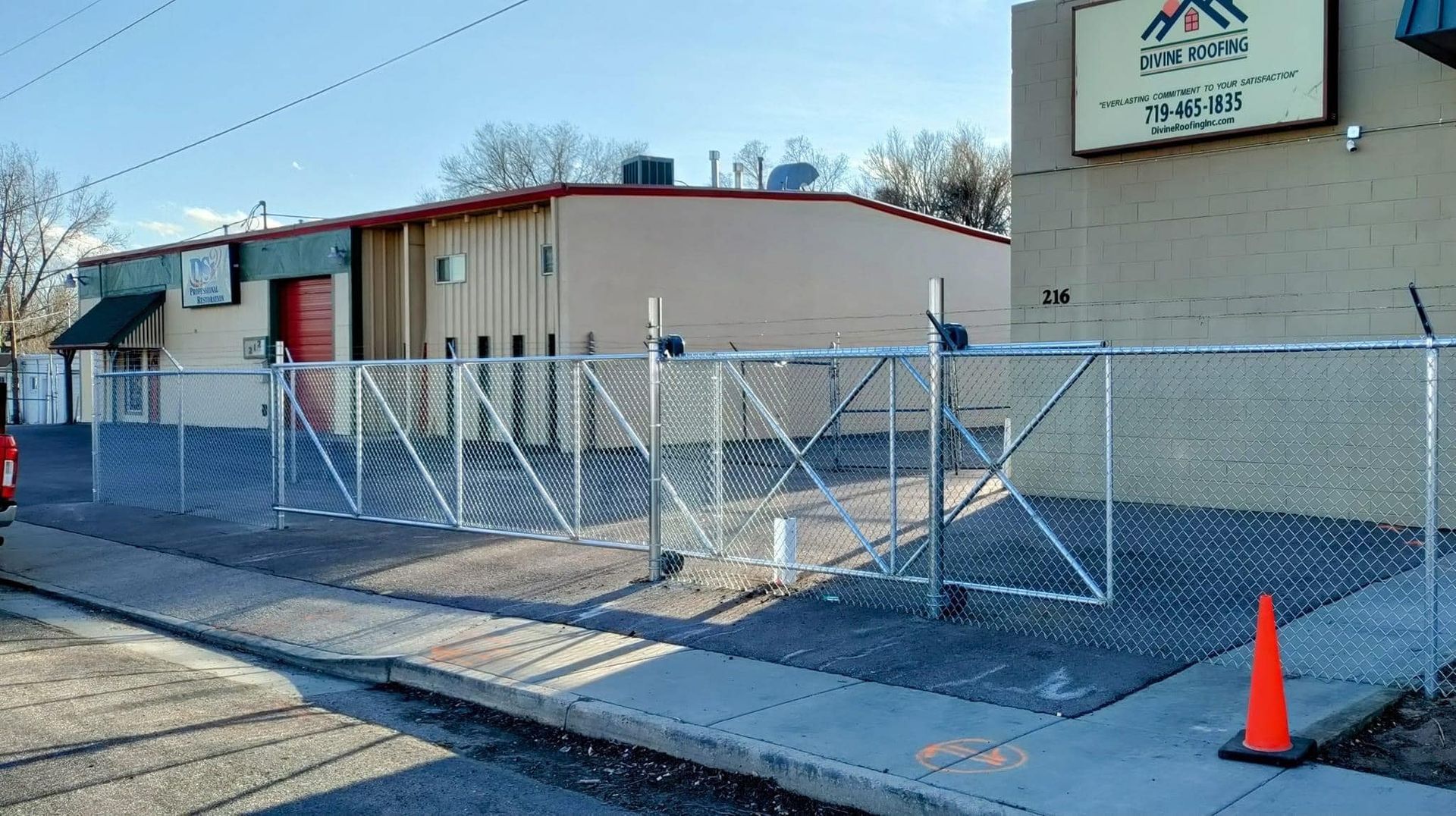
Perimeter Security Without Obstructed Sightlines
Chain Link Fencing in Colorado Springs for properties needing durable enclosures with visibility and cost efficiency
Chain link fencing surrounds more commercial yards, athletic fields, and residential properties than any other fence type because it provides secure enclosures without blocking visibility or requiring extensive maintenance. The open mesh design allows airflow that reduces wind load on posts, permits security monitoring across enclosed areas, and costs significantly less per linear foot than solid fencing materials. Diamondback Fence Company installs chain link fencing throughout Colorado Springs for backyards requiring pet containment, storage yards needing theft deterrence, and industrial properties where perimeter definition matters more than visual screening. Installation practices focus on stable post setting, proper tension application, and gate configurations that handle frequent use without sagging.
Installation involves setting terminal and line posts at specified intervals, stretching fabric mesh between posts under controlled tension, and securing the mesh to top rails and post frames using tension bars and tie wires. Fabric gauge and height vary based on security requirements—residential installations typically use lighter gauge mesh at four to six feet, while commercial applications often require heavier gauge fabric at eight feet or taller with barbed wire top strands.
Schedule an on-site evaluation to determine fence height, gate placement, and fabric specifications suited to your enclosure needs.
Why Chain Link Construction Lasts Decades
Durable chain link installation depends on post embedment depth and concrete footing diameter that resist lateral force from fabric tension and wind pressure. Terminal posts at corners and gate openings bear greater stress than line posts, requiring larger diameter and deeper setting. Fabric tension must be sufficient to prevent sagging without overstressing post anchors—undertensioned fabric develops waves and dips, while overtensioned mesh pulls posts inward over time. Galvanized coating on fabric and framework protects against rust formation in Colorado's variable moisture conditions.
After installation completes, the enclosure defines boundaries clearly while allowing visibility into and out of the secured area. Dogs remain contained without obstructing your view of the yard, and equipment stored behind the fence remains visible for monitoring. The fence withstands impact from balls, blown debris, and incidental contact without structural damage, and snow accumulation slides off mesh fabric instead of loading the fence with weight. Diamondback Fence Company installs chain link systems designed for long-term performance with minimal upkeep beyond occasional gate hinge lubrication.
Chain link fencing accommodates various gate sizes and configurations, from single walk gates to double drive gates for vehicle access. Privacy slats can be woven through mesh fabric to reduce visibility where needed, and vinyl coating over galvanized wire provides color options and additional corrosion resistance in high-moisture environments.
What Property Owners Usually Ask
Chain link fencing offers practical benefits for many applications, and understanding construction details helps clarify whether it fits specific property needs and usage patterns.
What differentiates residential-grade chain link from commercial-grade installations?
Residential fencing typically uses nine-gauge fabric with smaller mesh openings and lighter framework suitable for pet containment and boundary definition. Commercial-grade systems employ six or eleven-gauge fabric, larger diameter posts, and closer post spacing to handle higher security requirements and potential impact from equipment or vehicles.
How does chain link fencing perform in Colorado Springs wind conditions?
The open mesh design allows wind to pass through rather than creating solid resistance, reducing force on posts compared to privacy fencing. Proper post setting depth and concrete footing size prevent wind-driven movement, and top rail attachment distributes tension evenly across the fence line to maintain stability during high-wind events common in the region.
Why do some chain link gates sag or drag over time?
Sagging occurs when gate frames lack diagonal bracing or when hinges loosen from post attachment points. Gates without tension bars across the frame rely solely on perimeter tubing for rigidity, which flexes under repeated opening force. Properly constructed gates include internal bracing and hinges mounted with through-bolts rather than self-tapping screws.
What maintenance extends chain link fence lifespan?
Periodic inspection identifies loose tie wires, tension bar slippage, or post lean before problems worsen. Gate hinges benefit from annual lubrication, and fabric damaged by impact should receive repair before tears expand. Vegetation trimming along fence lines prevents vine growth that stresses fabric and creates rust-promoting moisture traps.
How long does galvanized chain link fencing last before requiring replacement?
Galvanized chain link typically functions for 20 to 30 years in moderate climates, with lifespan affected by soil chemistry and moisture exposure. Vinyl-coated fabric lasts slightly longer by adding a secondary corrosion barrier, though coating damage from impact exposes underlying metal. Posts often outlast fabric when properly set, allowing fabric replacement without complete system removal.
Diamondback Fence Company installs chain link fencing for residential, commercial, and industrial applications, configuring systems to match security requirements, budget parameters, and long-term durability expectations. Request a quote to review chain link options for your property enclosure or access control needs.