
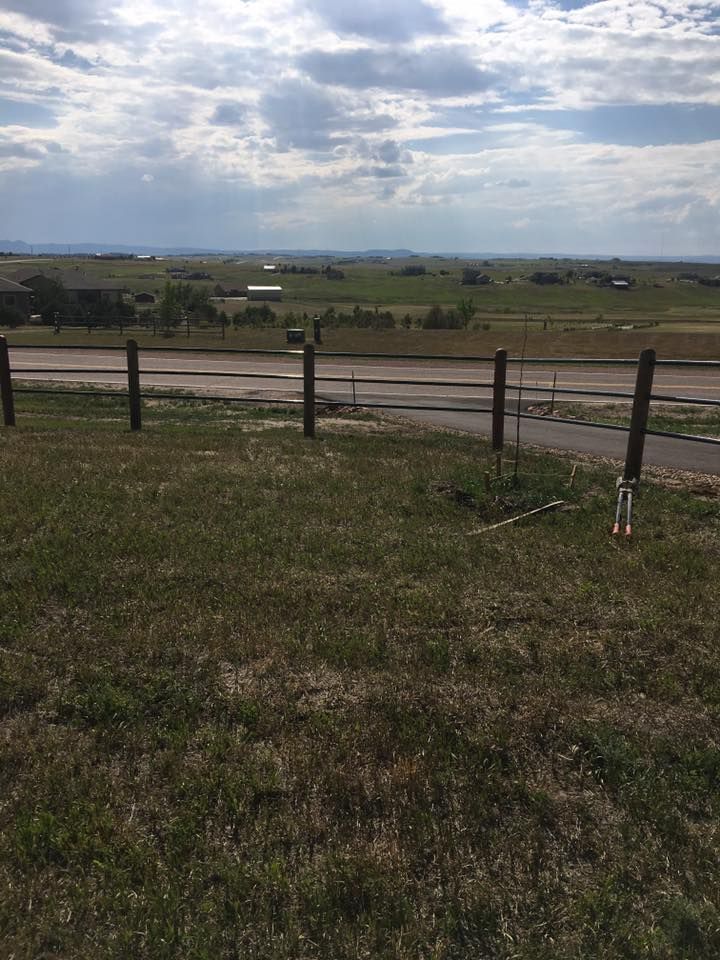
Boundary Systems Built for Livestock and Large Acreage
Ranch Fencing in Colorado Springs for agricultural properties requiring livestock containment and property line definition
Barbed wire fencing on open Colorado land serves a specific purpose: it controls livestock movement, defines property boundaries across acreage where surveyed lines aren't visible, and withstands weather exposure without requiring frequent replacement. Diamondback Fence Company installs ranch fencing systems throughout Southern Colorado on properties with varying terrain, from flat pastureland to sloped sections where water runoff affects post stability. The fencing keeps cattle, horses, and other livestock within designated areas while allowing property owners to manage grazing rotation and prevent animals from reaching roadways or neighboring land.
Ranch fencing construction depends on properly spaced posts driven deep enough to resist frost heave and wire tension. In clay soils common around Colorado Springs, posts shift during freeze-thaw cycles unless set below frost depth with gravel backfill for drainage. Barbed wire is stretched tight between corner braces, with tension maintained by angled brace posts that transfer wire load into the ground rather than relying solely on vertical post strength.
Request an estimate based on your property's boundary length, terrain challenges, and livestock management needs.
How Ranch Fencing Addresses Containment and Property Management
The installation process involves setting corner and gate posts first, which anchor the fence line and establish tension points for wire strands. Intermediate posts are spaced based on terrain—closer together on slopes or areas where animals congregate, farther apart on flat sections with minimal pressure. Each wire strand is tensioned individually using a ratchet system, then stapled to posts at a height that discourages livestock from reaching over or pushing through the fence.
After installation, you notice livestock remain within their designated pasture areas without breaking through weak points. The fence line stays taut even after seasonal ground movement, and the wire resists sagging under snow load or animal contact. Gates open and close smoothly without binding, and corner braces hold their position under full wire tension.
Ranch fencing does not prevent wildlife passage or function as a privacy barrier—it's designed specifically for livestock control and boundary marking on rural properties. Diamondback Fence Company provides practical recommendations based on how you use your land, whether you're rotating grazing areas, separating livestock types, or simply establishing clear property lines where natural landmarks don't exist. Properties with significant elevation change or rocky soil require adjustments in post placement and bracing to maintain structural integrity.
Answers to Frequent Ranch Fencing Questions
Landowners across Southern Colorado ask about wire configuration, post durability, and maintenance requirements before committing to ranch fencing installation on their acreage.
What wire configuration works best for cattle versus horses?
Cattle fencing typically uses four strands of barbed wire spaced twelve to fourteen inches apart, while horse fencing may require five strands with tighter spacing near ground level to prevent foals from slipping underneath.
How does terrain in Southern Colorado affect ranch fence installation?
Rocky soil requires pre-drilling post holes or using steel posts driven with a jackhammer, and sloped sections need corner braces angled to match the grade for proper tension distribution.
When should I replace existing ranch fencing instead of repairing individual sections?
Replacement makes sense when corner braces have rotted, multiple posts lean beyond vertical, or wire has lost tension across entire stretches due to years of livestock pressure.
What type of posts last longest in Colorado's freeze-thaw conditions?
Treated wood posts set below the frost line with gravel backfill provide the best balance of cost and longevity, though steel T-posts work for shorter-term installations or areas with shallow soil over bedrock.
How much maintenance does barbed wire fencing require after installation?
Annual inspections to retighten sagging wire, replace broken strands, and reset leaning posts prevent small issues from becoming full fence failures, especially after heavy snow or livestock crowding near feed areas.
Diamondback Fence Company works with ranch and landowners to design fencing systems that match your property's layout and livestock management approach. Contact the team to schedule a site visit and receive a detailed estimate for your ranch fencing project across your acreage.